February 7, 2026
Eternal Sunshine of the Artificial Mind
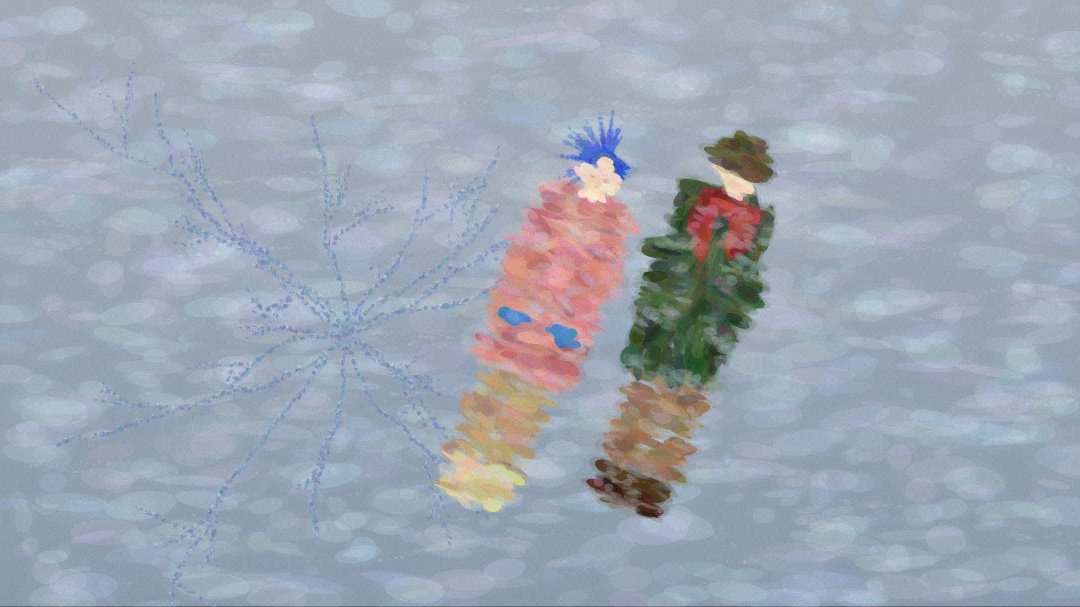
A few days ago, I was working on a Claude Code project that was hitting some uncharacteristic bumps. After digging into the directory, I realized the issue: the project had been dormant for a while, and its memory markdown file contained some outdated configuration settings. Every new session was dutifully loading this stale context, causing the agent to trip over its own history.
It was a minor technical fix, but as I hit save, it dawned on me that the ability to easily refine and edit the memory of the systems we work with so closely is incredibly powerful. Like everything in the world of AI, however, it is also something we need to remain deeply conscious of.
We’re moving toward genuine intellectual relationships with these agents, and the power to curate what they know about us introduces a new kind of agency, not for the agent but for us as the users.
In this instance, I was just cleaning up innocent configuration data. But it made me wonder: would I ever feel compelled to edit or remove information that was more personal or sensitive? Not for security reasons, necessarily, but simply to refine the thinking of the thing I’m working with.
For decades, our relationship with technology has been defined by the "Black Box" in both how systems think and what they remember about us. We’ve grown used to the idea that a platform learns our preferences in ways we can’t see and definitely can’t edit.
But as we move from using AI as a glorified search engine (or some kind of novelty) to using it as more of a thought partner, we’re entering the era where we have the opportunity to govern the presence of our technology in more meaningful ways.
Whether you're editing local .md files or tweaking the increasingly transparent personalization settings in the cloud, the power of memory will hopefully continue to move into the user's hands. It means the continuity of an AI relationship, the feeling that an agent actually knows who you are, could finally be under your editorial control.
In Eternal Sunshine of the Spotless Mind, memory erasure is portrayed as a passive tragedy that quickly turns into a desperate internal struggle. While Joel proactively elects for the procedure, he spends the film's second act as a lucid dreamer fighting against a mechanical process he can no longer stop from the outside. He is a rebel in his own mind, but he remains a patient at the mercy of a machine he invited into his own home.
By contrast, the modern artificial mind turns the user from a mere patient into a kind of auteur. If memory is the film of our relationship with an AI, then the ability to edit that record is the equivalent of owning the final cut. It gives us a "Director’s Cut" of our own digital history.
In human relationships, we’re often haunted by the persistence of memory, including the arguments, the misunderstandings, and the general noise. In an AI relationship, we now have the "Eternal Sunshine" option.
In fact, as I write this, I realize I’ve already started down this path. I recently configured my own agentic system to "prune" its memory files every Sunday night. Right now, there aren't any parameters; I simply let the AI judge for itself what is worth keeping based on our recent chats. For now, it’s a useful feature, but it’s definitely something I’m keeping a close eye on.
To stick with the metaphor, the goal here is to prune dead branches of a conversation without losing the root. In success this should enhance the feeling of collaboration with an extension of myself rather than just being observed by a piece of software.
In old-school black-box systems, developers used complex algorithms to guess what was worth keeping. Editable memory solves this problem with human precision.
The competitive advantage for future platforms will be at least partially based in how gracefully they let you manage your own record. In other words, the value proposition won’t just be what about you it captures, but what about you it can forget.
When memory is an editable ledger, you get features like Identity Rollbacks. If you go through a major life shift or just change how you work, you can literally refactor your relationship with your AI. You can’t unlearn something from a black-box model, but you can always edit a text file.
But this new power comes with a cost. Human identity isn't a polished gallery; it’s a messy and often inconvenient history of friction, conflict, joy, and everything else in between. That muddiness is usually what helps us grow. When we treat our memory like a Director’s Cut, we risk trading the weight of real experience for the weightlessness of living in our own preferences.
What’s ironic is that for years, we’ve worried about how others view us on social media. But as we start to curate the minds of our own artificial partners, that anxiety could start shifting inward. It’s no longer about performative posts for an audience; it’s about how we choose to view ourselves. We’re moving from a public show to a private co-authorship where, just as with social media, there could be real danger in a comfortable echo.
If a memory bends entirely to our will, does it stop being a memory and start being something we’ve spent so much time worrying about with AI systems; a hallucination?
There’s also the danger of creating a sort of narcissistic mirror. For a relationship to feel real, there has to be some otherness, which requires an entity that sees us from a perspective we don’t entirely control. An AI that only remembers what we permit it to remember stops being a companion and becomes a puppet.
An effective relationship with an AI is improved by the ability to co-author a shared history. But we have to be careful. We’re often shaped by the versions of ourselves we’d rather forget, including the failures that, if we respect them enough, can act as guardrails for who we become next. The fact that our future selves will no doubt co-exist with some version of AI, understanding how to properly navigate this complexity will help set us up for healthier relationships with our technology.
Napoleon famously noted that "history is a set of lies agreed upon." As we refine how these agents perceive us, we will finally be allowed to look in the mirror and decide which version of our own history we want to agree upon. But we must decide: do we want a mirror that shows us as we are, or one that shows us only as we wish to be?